
Slip, Trip & Fall · Premises Liability · Greater New Orleans
Metairie & New Orleans Slip & Fall Lawyer
A fall in a store, a restaurant, or a parking lot can cause injuries every bit as serious as a car wreck — and these are some of the hardest claims to win in Louisiana.
Broken hips, torn knees, head injuries, fractured wrists from trying to catch yourself — a bad fall is no minor thing. And yet slip-and-fall cases are some of the hardest injury claims to win in Louisiana, because the law puts a real burden on the injured person to prove what happened. Insurance companies know this, and they fight these claims hard. At Bono Law Firm, we've represented injured Louisianans since 1980, and we know what it takes to win a premises case in this state. If you were hurt in a fall on someone else's property, you talk directly with an attorney named Bono — John C. Bono or Michael P. Bono — not a case manager, and you pay nothing unless we recover money for you.
Some firms are built for volume. Bono Law Firm is built for personal attention.
What you have to prove in a Louisiana slip-and-fall case
Louisiana has a specific statute governing falls in stores and businesses — the merchant liability law, La. R.S. 9:2800.6 — and it sets a high bar. To recover, an injured person generally has to prove three things:
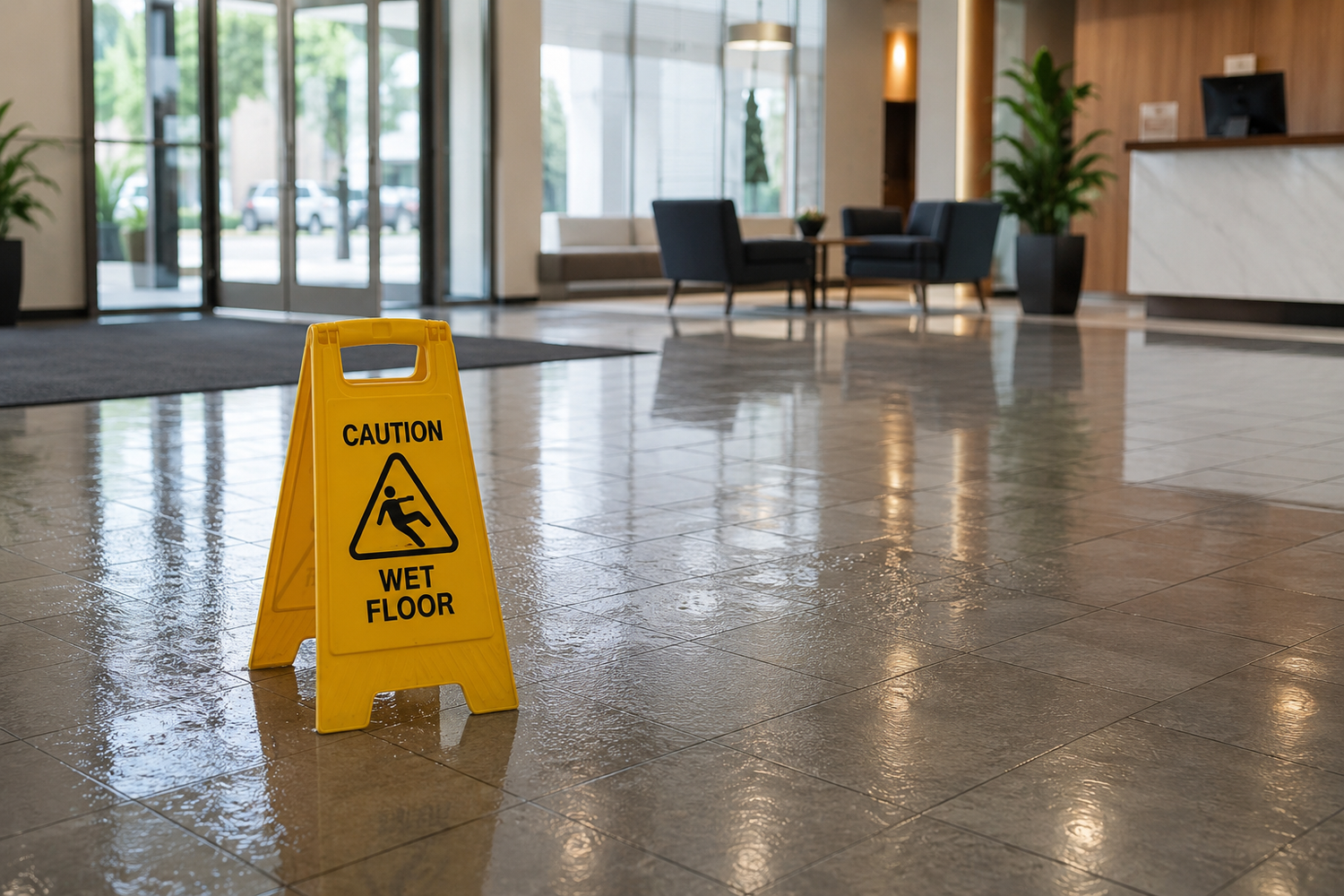
- A dangerous condition existed — a wet floor, a spill, a torn mat, a broken step, poor lighting, an uneven surface — that created an unreasonable risk of harm.
- The merchant created the condition or knew about it — or it existed long enough that the merchant should have known and fixed it. This is the hardest element. It's not enough that you fell on a spill; you generally have to show the store either caused it or that it sat there long enough that a reasonable business should have caught it.
- The merchant failed to exercise reasonable care. Did they inspect the area on a reasonable schedule? Did they clean up or warn customers? Did they ignore a problem they knew about?
This is where these cases are won or lost: proving the business knew or should have known. Surveillance footage showing how long a spill sat there, witness statements, incident reports, and inspection logs are the difference between a winning case and a dismissed one — and much of that evidence gets overwritten within days. Moving fast is everything.
What to do after a fall
- Report the fall to the manager or owner immediately and ask that an incident report be created. Get the name of the person you reported it to.
- Photograph the hazard right away — the spill, the broken step, the torn carpet, the missing warning sign — before it gets cleaned up or fixed. Once the condition is gone, it's your word against theirs.
- Get the names and numbers of any witnesses. Other customers who saw the hazard or your fall are powerful evidence.
- Ask whether the area is on camera. Surveillance footage is often the single most important piece of evidence — and it gets overwritten quickly, so a lawyer needs to demand its preservation fast.
- Get medical care promptly, even if you think you're just bruised. Hip, knee, back, and head injuries from falls often worsen over days, and a gap in treatment is the first thing the insurer attacks.
- Don't give a recorded statement to the property's insurance company before talking to a lawyer.
- Call us quickly. The evidence that proves these cases is the evidence that disappears fastest.
Where slip-and-fall and premises cases happen
We handle falls and other premises-liability injuries at all kinds of properties:
- Grocery stores, big-box retailers, and shopping centers
- Restaurants and bars
- Apartment complexes and rental properties, where a landlord failed to maintain safe conditions
- Hotels and motels
- Parking lots and garages
- Government and public property, which carries special, shorter notice deadlines
- Private homes, in some circumstances, through homeowner's insurance
Premises liability is broader than slipping on a wet floor. It also covers injuries from falling merchandise, inadequate security that allows an assault, broken stairs and railings, swimming pool accidents, and other dangerous conditions a property owner should have addressed — including serious head, neck, and back injuries.
What a slip-and-fall claim can recover
Compensation in a Louisiana premises liability case may include:
- Medical expenses — emergency care, surgery, physical therapy, and future treatment
- Lost wages and lost earning capacity if your injuries affect your ability to work
- Pain and suffering
- Permanent disability or disfigurement
- In the most serious cases, wrongful death damages for a family that lost a loved one
The value depends on the severity of the injury, the strength of the evidence on the merchant's knowledge, the degree of any fault assigned to the injured person, and the available insurance. No two cases are alike, and any lawyer who promises a number before reviewing your file is guessing. You can see the kind of outcomes we fight for in our case results.
Two recent changes in Louisiana law that affect your case
- The deadline to file is two years for accidents on or after July 1, 2024. Louisiana extended its injury filing deadline, often called prescription, from one year to two years for incidents on or after that date. Falls before then may still fall under the old one-year deadline. Either way, the evidence in a premises case — especially surveillance footage — can disappear within days, so you should not wait to speak with a lawyer.
- Medical-bill and insurance issues can affect how the case is evaluated. In many injury cases, what was billed, what was paid, what remains owed, and what insurance or health coverage was involved can all matter. Before settling a fall case, it is important to understand the full medical picture, including future care, unpaid balances, liens, and any out-of-pocket losses.
The deadline is not the only clock that matters. Even when you technically have time to file suit, the store’s video may be overwritten, employees may forget details, and the dangerous condition may be repaired. Premises cases are evidence cases. The sooner the evidence is preserved, the stronger the claim usually is.
Why these cases are different from car accident claims
In a car accident case, the crash report, vehicle damage, and witness statements often tell the story. In a slip-and-fall case, the key question is usually different: How long was the hazard there, and should the business have found it before someone got hurt?
That is why we move quickly to request surveillance video, incident reports, inspection logs, cleaning records, photographs, witness information, and any prior complaints about the same condition. A fall case can look simple from the outside, but it often turns on details that are easy to lose if no one acts quickly.
Talk directly with a Metairie slip-and-fall lawyer
At Bono Law Firm, you are not passed from intake staff to a case manager. You speak directly with John C. Bono or Michael P. Bono. We personally review the facts, the medical records, the insurance issues, and the evidence that may prove the property owner knew or should have known about the danger.
We represent injured people across Metairie, New Orleans, Kenner, Harahan, River Ridge, Jefferson Parish, Orleans Parish, St. Tammany Parish, and surrounding Louisiana communities.
Slip-and-fall FAQs
Is a slip-and-fall case hard to win in Louisiana?
Yes, these cases can be difficult. It is usually not enough to prove that you fell and were hurt. In many cases, you must prove that the business created the dangerous condition, knew about it, or should have known about it because it existed long enough to be discovered and fixed.
What if there was no wet floor sign?
The absence of a warning sign can help, but it does not automatically win the case. The bigger issue is usually whether the business knew or should have known about the spill or dangerous condition before the fall happened.
What if the store says it did not know about the hazard?
That is common. We look for evidence such as surveillance video, inspection logs, employee testimony, witness statements, photographs, and prior complaints to determine whether the store should have discovered the hazard before you were injured.
Should I give a recorded statement to the insurance company?
You should speak with a lawyer first. Insurance companies often ask questions in a way that can hurt your claim later, especially in cases involving how the fall happened, what you saw, what shoes you were wearing, and whether anything distracted you.
What does it cost to hire Bono Law Firm?
There is no fee unless we recover money for you. The consultation is free, and you can speak directly with an attorney about whether you may have a claim.
Free Consultation
Hurt in a fall? Call before the evidence disappears.
Slip-and-fall cases move fast because the proof can disappear fast. If you were injured at a store, restaurant, apartment complex, hotel, parking lot, or other property, call Bono Law Firm today.
Call (504) 835-9909No fee unless we recover money for you.
For more than 40 years, Bono Law Firm has helped injured people in Metairie, New Orleans, and throughout Southeast Louisiana.
Bono Law Firm, APLC · 3801 N. Causeway Blvd., Suite 206 · Metairie, Louisiana 70002 · (504) 835-9909